Be the Glitch: Why Imperfection Is the Only Luxury Left in the Age of AI
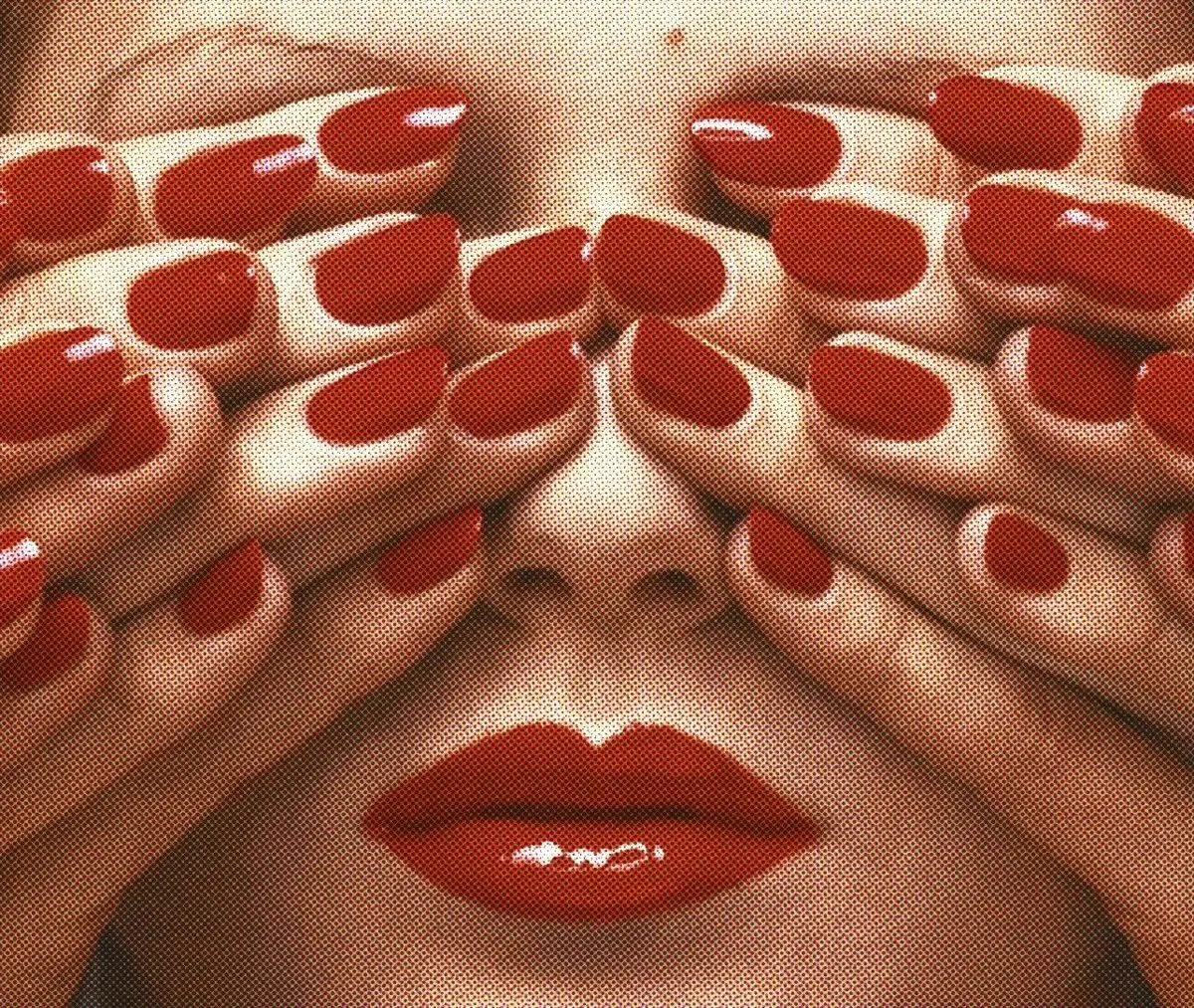
We are witnessing the great smoothing of culture.
Look at your feed. The faces have the same poreless "Instagram Face" filter. The business posts have the same "LinkedIn Voice" cadence. The music has the same algorithmic hook structure.
We are drowning in the "Average."
This is not an accident. It is a mathematical inevitability. Artificial Intelligence is trained on the "median" of everything humanity has ever created. Its goal is to predict the next most likely word, pixel, or note. It is an engine designed to push everything toward the center. It rewards symmetry, predictability, and optimization.
In this landscape, being "perfect" is no longer an achievement. It is a default setting. It is a commodity.
If you want to live a life that matters, if you want to be your own muse, you have to stop trying to optimize yourself. You have to start doubling down on the things the algorithm would try to "fix."
You have to be the Glitch.
The Algorithm of the Average
Algorithms are designed to flatten taste. They are engagement machines that learn what the majority likes and then serve it back to us in a loop.
This creates a dangerous feedback loop. We see what performs well, so we subconsciously copy it. We smooth out our edges. We hide our weird obsessions. We polish our writing until it sounds like a press release. We are voluntarily turning ourselves into training data for a machine that wants us to be the same.
The result is a world that is technically flawless but spiritually dead.
Authenticity Looks Like "Bad Data"
To a machine, a unique human soul looks like an error.
Your specific, sensory memory of the smell of rain on hot asphalt? That is unnecessary noise. Your weird, contradictory love for both heavy metal and 18th-century porcelain? That is a data outlier. Your unpolished, raw thought that hasn't been run through a spell-check or a PR filter? That is inefficiency.
But to a human, these things are the signal.
Authenticity now looks like "bad data" to a machine. And that is exactly why it is valuable.
The things that make you inefficient are the things that make you irreplaceable. The "human signal" is found in the quirks, the flaws, and the specificities that an AI would edit out.
Imperfection Is the New Luxury
We have talked about how Silence is the New Luxury. I would argue that Imperfection is its sister.
In a world where AI can generate a flawless image in seconds, the hand-drawn line with a wobble becomes precious. In a world of auto-tuned vocals, the crack in a singer's voice becomes emotional gold. In a world of ChatGPT essays, a sentence with a weird, jagged rhythm becomes a relief.
This is the "Patina Philosophy" applied to the self.
If you optimize every part of your life, you become a commodity. You become replaceable by the next version of the software. But if you embrace your glitch, you become a sovereign entity.
How to Be the Glitch
This is a call to action for the "Main Character."
Stop trying to fix your quirks. Amplify them.
If you have a weird hobby, make it the center of your personality. If you have a specific, unpopular opinion, voice it loudly. If you have a scar, a stutter, or a gap in your resume, do not hide it. Frame it.
Treat your flaws not as bugs, but as the primary source material for your life and work. They are the only things you possess that cannot be scraped, aggregated, and averaged out by a server farm.
The future belongs to the anomalies. It belongs to the people who are brave enough to ruin the curve.
Be the error in the code. Be the glitch in the system. Be human.
