The Night Shift and Why Fellini Treated His Dreams Like a Film Set
In the modern world, we are obsessed with the "morning routine." We read endless articles about how successful people spend their first hour of the day. But I’ve always been more fascinated by how the true visionaries spend their nights.
Federico Fellini, the legendary director behind La Dolce Vita and 8½, didn't view sleep as a passive recharge. He viewed it as his "Night Shift."
For Fellini, the moment he closed his eyes, he wasn't clocking out. He was walking onto a second, more chaotic, more brilliant film set. He understood something that most founders and creatives miss. The sleeping mind is the ultimate production studio. It has an infinite budget, no laws of physics, and the most honest scriptwriters in the world.
As a founder who treats lucid dreaming as a strategic tool, I look to Fellini not just for cinematic inspiration, but for a methodology on how to mine the subconscious for genius.
Cinema Uses the Language of Dreams
Fellini famously said, "Talking about dreams is like talking about movies, since the cinema uses the language of dreams."
This is the core philosophy. If you are a world-builder, whether you are building a tech brand, a fashion house, or a video game, you are essentially trying to replicate the immersive feeling of a dream.
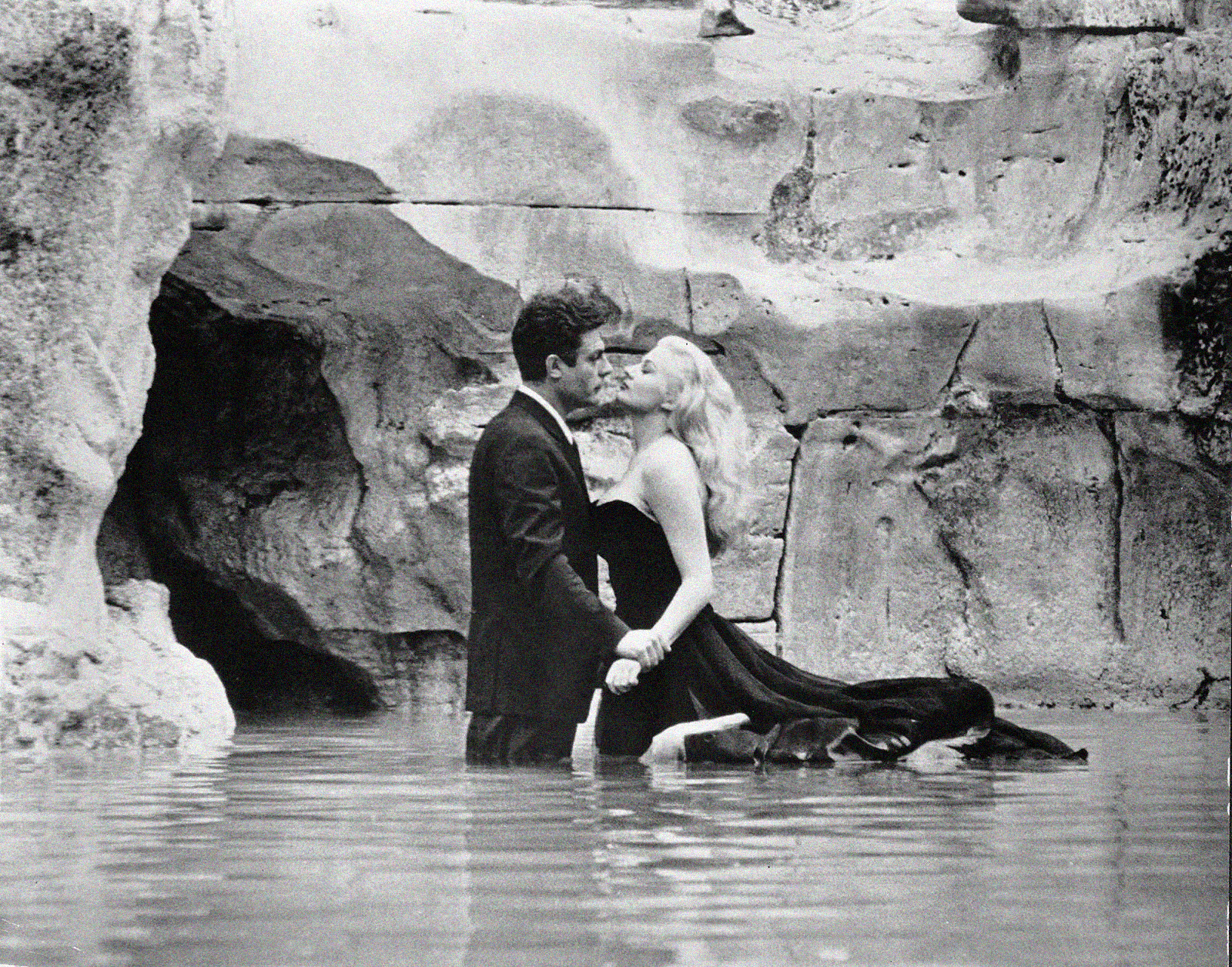
You can see this dream logic operating perfectly in La Dolce Vita. On the surface, it is a film about Roman high society.But if you look closer, it is structured exactly like a lucid dream.
Think about the opening scene. A statue of Jesus is hanging from a helicopter, flying over the ruins of ancient Rome while beautiful women in bikinis wave from a rooftop. It makes no rational sense. It is pure, surrealist dream imagery brought to life.
The film doesn't follow a standard plot. It wanders. It moves from one disconnected, hyper-vivid episode to the next. The characters float through the night in a state of glamorous confusion. The iconic scene in the Trevi Fountain isn't just romance. It is a moment of suspended time where the characters step out of reality and into a fantasy, exactly like a moment of lucidity.
Fellini understood that his waking creativity was limited by reality. But his "Night Shift" was where he scouted these locations. It is where he saw the helicopter and the fountain. His films feel dreamlike because they were literally born there.
The Book of Dreams
This wasn't a vague artistic sentiment. It was a rigorous discipline.
For decades, from the 1960s until 1990, Fellini kept a massive, chaotic, colorful diary known as Il Libro dei Sogni (The Book of Dreams).
He didn't just write "I dreamed of a train." He treated the journal as a storyboard. He sketched frantically. He used felt-tip pens to capture the colors, the distorted faces, the gigantic women, the flying popes. He approached his dream journal with the same intensity he approached a shooting script.
This book wasn't a diary of a sleeping man. It was the R&D lab for his waking masterpieces.
The Fellini Method for Modern Creatives
You don't have to be an Italian director to use this. As founders and leaders, we can adopt the Fellini Method to upgrade our own "Night Shift." Here is how to apply his cinematic approach to your dream work.
1. Don't Just Write and Start Sketching
This is the game-changer. Most people keep a text-based dream journal. Fellini drew.
You don't need to be an artist. Stick figures work. The act of drawing a dream engages the visual cortex and solidifies the memory in a way words cannot. It trains your brain to pay attention to the aesthetics of your dreams. You start noticing the lighting, the costumes, and the architecture. It makes your dreams more vivid and easier to control.
2. Scout Your Locations
Fellini’s films are famous for their atmosphere. In your lucid dreams, stop rushing the plot and start scouting. Look at the details of the room. Touch the walls. Observe the light. By treating the dream environment as a "set," you ground yourself in the experience. This stabilizes the lucid state and deepens the immersion.
3. Treat Characters as Cast Members
In a lucid dream, the people you meet are projections of your own psyche. Fellini treated them as a cast. If a "character" appears, don't just run past them. Direct them. Ask them their lines. Ask them what they represent. You will be shocked by the dialogue they deliver. It is often the exact insight you’ve been searching for in your waking life.
We spend a third of our lives asleep. To treat that time as "dead air" is a waste of human capital.
Fellini teaches us that if you are brave enough to work the Night Shift, you will never run out of ideas. You just have to show up, watch, and record the madness. The studio is always open. You just have to close your eyes and yell "Action."
