From Perception to Power: Insights from Sima Bahous and CSW70
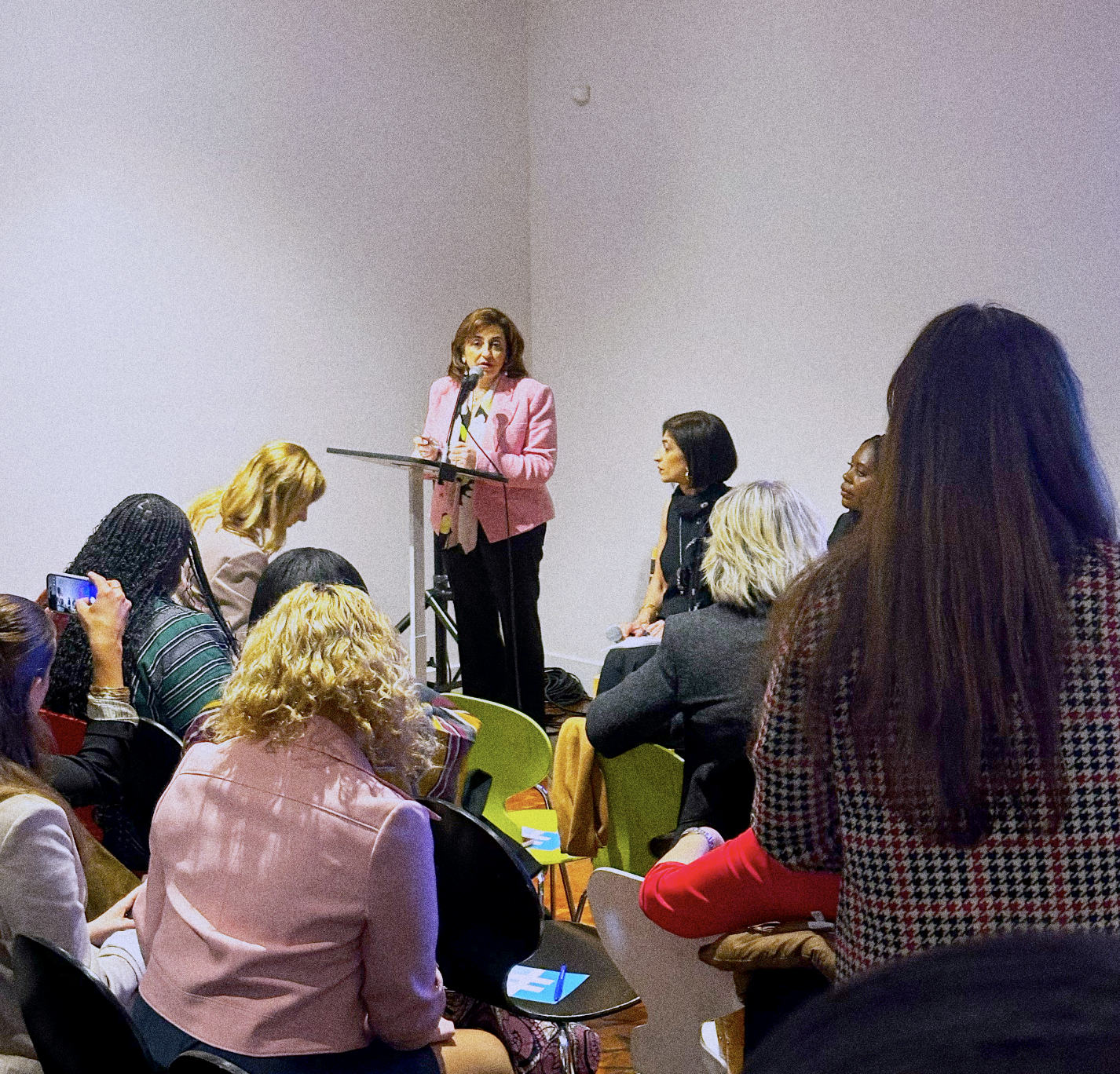
Last Thursday, Camille and I walked into Scandinavia House feeling the high stakes of the room. We were invited to the briefing titled Perception and Policy: What the Latest Data Reveals About Women in Leadership, held during the 70th session of the Commission on the Status of Women. As founders of WERULE, we are obsessed with the mechanics of power—how women attain it and, more importantly, how they retain it. Joining this global vanguard of policy architects and activists felt like a validation of everything we are building.
The morning centered on the launch of the latest Reykjavik Index for Leadership. This is an evidence-based tool that measures societal perceptions of whether men and women are equally suited for leadership. While the data provided the map, the voices on stage provided the fire.
The Vision of Sima Bahous
The most profound moment of the event arrived with a contribution from Sima Bahous, the Executive Director of UN Women. There is a specific kind of gravity that enters a room when Sima speaks. She did not just offer clinical analysis of the research. She shared a historic and necessary hope. She spoke about finally seeing a woman appointed as the next Secretary General of the United Nations.
For Camille and me, this vision served as a powerful bookend to the entire briefing. Sima is leading the charge at the highest level of global governance, and her call for a female Secretary General is not just about representation. It is about an fundamental redesign of global authority. She is pushing for a future where the pinnacle of power is no longer a restricted club. Her leadership is the ultimate example of why we refuse to accept a slow trajectory toward equality.
Voices from the Vanguard
The panel moved quickly from statistics to the raw realities of social and political influence. Atifete Jahjaga, the first female president of Kosovo, detailed how she used the moral authority of her office to establish her foundation, which focuses on financial empowerment. It was a masterclass in using a position of power to build a permanent infrastructure for others.
The conversation grew even more urgent when Shantel Marekera Chakara, an attorney at the World Bank, presented a stark reminder of the work ahead. At our current pace of reform, it will take 300 years to reach global pay parity. This number is not just a statistic; it is an alarm. I refuse to live in a world that asks us to wait three centuries for a basic standard of justice.
This is why we are so focused on unconventional routes to power. As Shola Mos-Shogbamimu, founder of the Women in Leadership Publication, urged the audience, we must make it our business to make good trouble every single day.
Designing a New Reality
İlayda Eskitaşçıoğlu, a UN Young Leader, used a brilliant visual to illustrate the need for coordination. She argued that without a connected chain between police, prosecutors, and NGOs, women will continue to fall through the gaps of the justice system. This resonated deeply with me. It is exactly why I am obsessed with the design of our tech at WERULE. We are building the coordination protocols that ensure women are no longer isolated in their journey toward leadership.
We left Scandinavia House deeply inspired by the refusal of these women to accept a 300-year timeline. We are not interested in the safe or the predictable. We are interested in the relentless coordination that accelerates the journey toward power.
While the data shows us where we are, it is the collective energy of leaders like Sima Bahous that shows us where we are going. We are moving past the era of mere perception and into the era of absolute agency. The future is being designed right now, and we are not waiting for permission to lead.
