The Muse Who Outlasted the Master
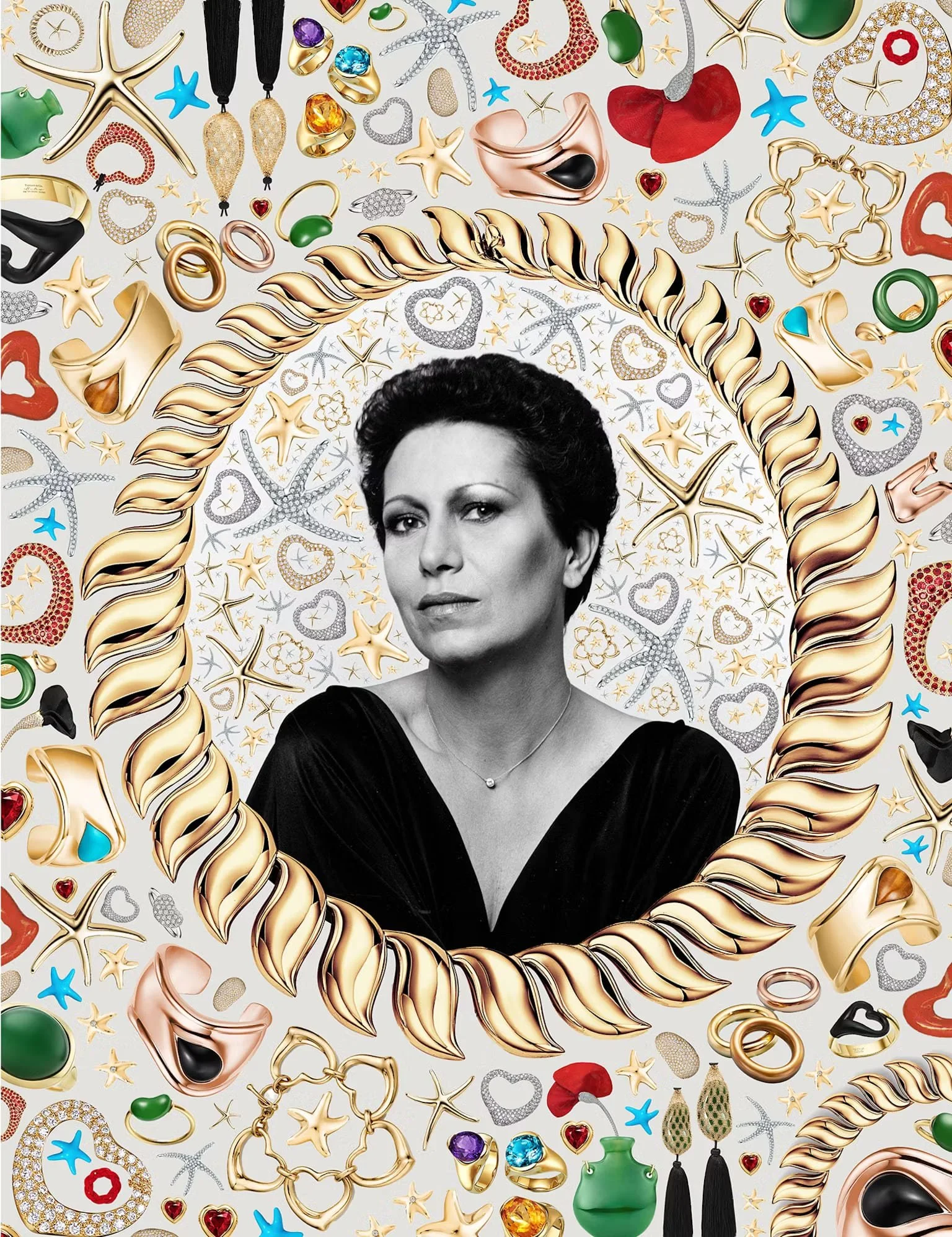
Courtesy of the W Magazine
The fashion industry loves a tragic muse. We are obsessed with the narrative of the beautiful, chaotic woman who inspires a male genius, only to fade into obscurity when the era ends. When Elsa Peretti first crossed paths with the legendary American designer Roy Halston Frowick, known to the world simply as Halston, she could have easily become just another footnote in his massive legacy. Instead, she completely obliterated the trope.
It was the early 1970s in New York City. The air was thick with disco, ambition, and a relentless desire to strip away the stiff formality of the previous decade. Halston was busy revolutionizing American fashion with his minimalist, sleek designs that helped define the era. Peretti, a runaway Italian aristocrat modeling his clothes, understood his vision on a cellular level.
She was never just a mannequin. She was a mirror, a collaborator, and eventually, a titan in her own right.
The Alchemy of Studio 54
Their relationship was forged in the VIP sections of Studio 54 and the pristine walls of Halston's headquarters. They shared a singular, uncompromising obsession with fluidity. Halston draped fabric so it would move perfectly with the female body. Peretti took that exact same philosophy and applied it to solid metal.
She began designing jewelry that felt like molten silver dripping across the collarbone. Halston immediately recognized her genius. He did not patronize her or keep her confined to his famed model entourage, the Halstonettes. He championed her. When he released his iconic, best selling fragrance, it was Peretti who designed the signature teardrop shaped perfume bottle. He also began incorporating her silver belt buckles and pendants into his runway shows, creating a unified aesthetic that defined the entire decade. They were the ultimate creative power couple, feeding off each other's relentless pursuit of minimalism.
The Handshake That Changed Tiffany
The true measure of a mentor is what happens when the doors are closed. Halston did not just give Peretti creative validation. He gave her the literal keys to the kingdom.
In 1974, Halston personally brokered the introduction between Elsa Peretti and the executives at Tiffany & Co. He walked her into the boardroom and essentially demanded they take her seriously. It was a massive gamble. Tiffany was known for diamonds, rigidity, and old money. Peretti was proposing organic, bone shaped cuffs made of sterling silver.
The result was a total revolution. Her debut collection sold out on the very first day. She singlehandedly turned silver into a covetable, high fashion material and completely democratized the Tiffany Blue Box for the modern, independent woman. She gave women permission to buy fine jewelry for themselves, stripping away the archaic idea that diamonds were just a financial transaction between men.
Architecting an Immortal Legacy
The tragedy of the Halston story is well documented. After several ill advised business decisions in the 1980s, he eventually lost control of his namesake brand. But the aesthetic philosophy he helped nurture in Elsa Peretti lived on to become immortal.
Peretti did not just survive the end of the disco era. She dominated the next five decades of fine jewelry. Her designs became so vital to Tiffany & Co. that at one point, her pieces accounted for a massive percentage of the brand's total global revenue. She took the minimalist, sensual education she refined alongside Halston and forged it into an untouchable empire.
She proves that the most powerful women in the room do not wait for history to remember them. They sculpt their own legacy in sterling silver.
