The Printemps Paradigm & Why New York’s Newest Retail Palace is a Masterclass in Fantasy
I was walking through the Financial District recently, watching the afternoon light bounce off the historic architecture, and I had a thought. In a city that practically invented the modern shopping experience, when did we stop expecting to be enchanted?
New York City has always been a ruthless stage for retail empires. Right now, we are watching the slow, unglamorous fade of the old guard. Bergdorf Goodman still leans heavily on the iconic, brilliant legacy of Linda Fargo to maintain its heartbeat, but the physical pulse of the space feels undeniably tired. Saks Fifth Avenue has completely lost its cultural currency, suffocating under the weight of archaic formats and endless, soulless racks.
The transactional department store is dead. Online shopping killed it, and frankly, it deserved to die. We do not need another cavernous building simply to acquire things. We have the internet for that. We need a place to feel things. We need a reason to put down our phones, step out into the world, and participate in a shared cultural dialogue.
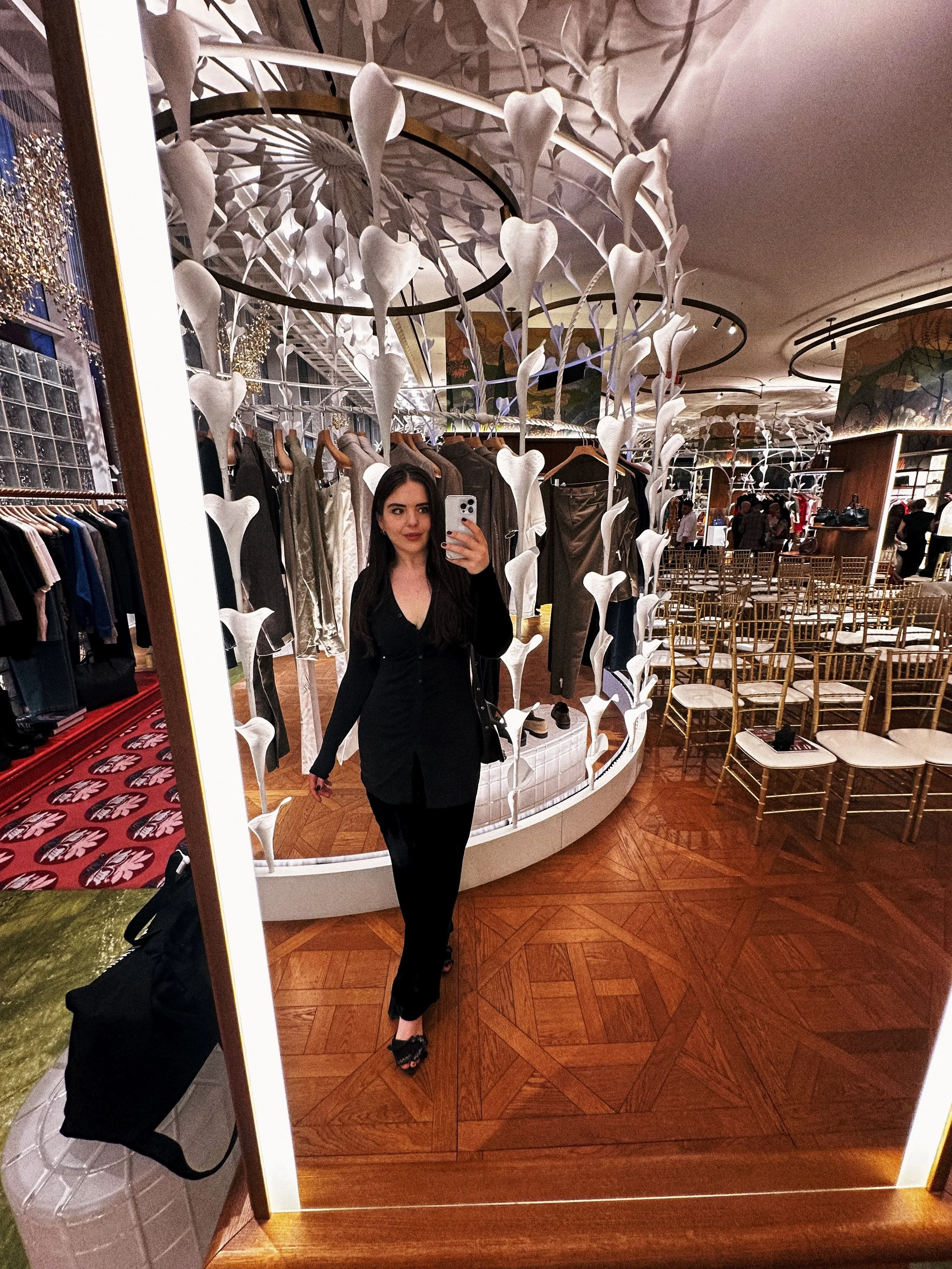
This brings me to the absolute phenomenon that is Printemps New York. Arriving at the historic One Wall Street, this 55,000 square foot masterpiece is not a department store. It is a wildly imaginative, luxurious Parisian apartment brought to life. Every time I walk through its doors, I am reminded of why I fell in love with fashion in the first place.
Printemps New York
The Illusion of the Endless Aisle
For the last decade, we have been told that the future of commerce is digital. The endless aisle, the one click checkout, and the algorithm that tells you exactly what you want before you even know you want it. But this hyper efficiency came at a massive psychological cost. We traded discovery for convenience. We traded the tactile thrill of a heavy silk lapel for a pixelated thumbnail.
Noted architect Kevin Roche recently introduced a concept called Visual Intelligence. He argued that in a world where consumers are increasingly bombarded by immersive, cheap visual stimuli, the need for meaningful and emotionally rich aesthetics has become a critical factor for success.
Printemps New York is the physical embodiment of Visual Intelligence. It challenges the reader to think about how we curate our own lives. Are you living a purely transactional existence, moving from one digital task to the next? Or are you demanding beauty in your physical environment? Printemps proves that humans still crave fantasy. We are desperate for environments that prompt curiosity, learning, and awe.
The Privilege of the Room: A Cultural Salon
There is a profound difference between being a consumer and being an invited guest. I feel an overwhelming sense of gratitude and absolute wonder every time I am welcomed into the Printemps ecosystem for their exclusive events. They have bypassed traditional retail entirely and transformed their space into a highly curated cultural salon.
I have stood under these soaring 33 foot ceilings and listened to the brilliant Prabal Gurung discuss the future of American fashion. I have shared space with Barbara Adelmann and Hamid Merati Kashani as they unveiled the vanguard science behind Fabbrica Della Musa.
Most recently, I experienced a surreal, cinematic evening celebrating the legendary costume designer behind The Devil Wears Prada and Sex and the City. Picture the sheer delight of watching little girls, styled impeccably like miniature Miranda Hobbes clones, running gleefully through a billion dollar Art Deco landmark. It was poetry. It was pure, unadulterated theater. It was everything the modern retail landscape has been starving for. You cannot buy that kind of energy. You have to orchestrate it.
Printemps Paris
L’Appartement: The Architecture of the Dream
Printemps CEO Jean-Marc Bellaiche and retail visionary Laura Lendrum understood exactly what was missing from the American market. Four years in the making, they collaborated with French architect Laura Gonzalez to build an immersive, tactile fantasy.
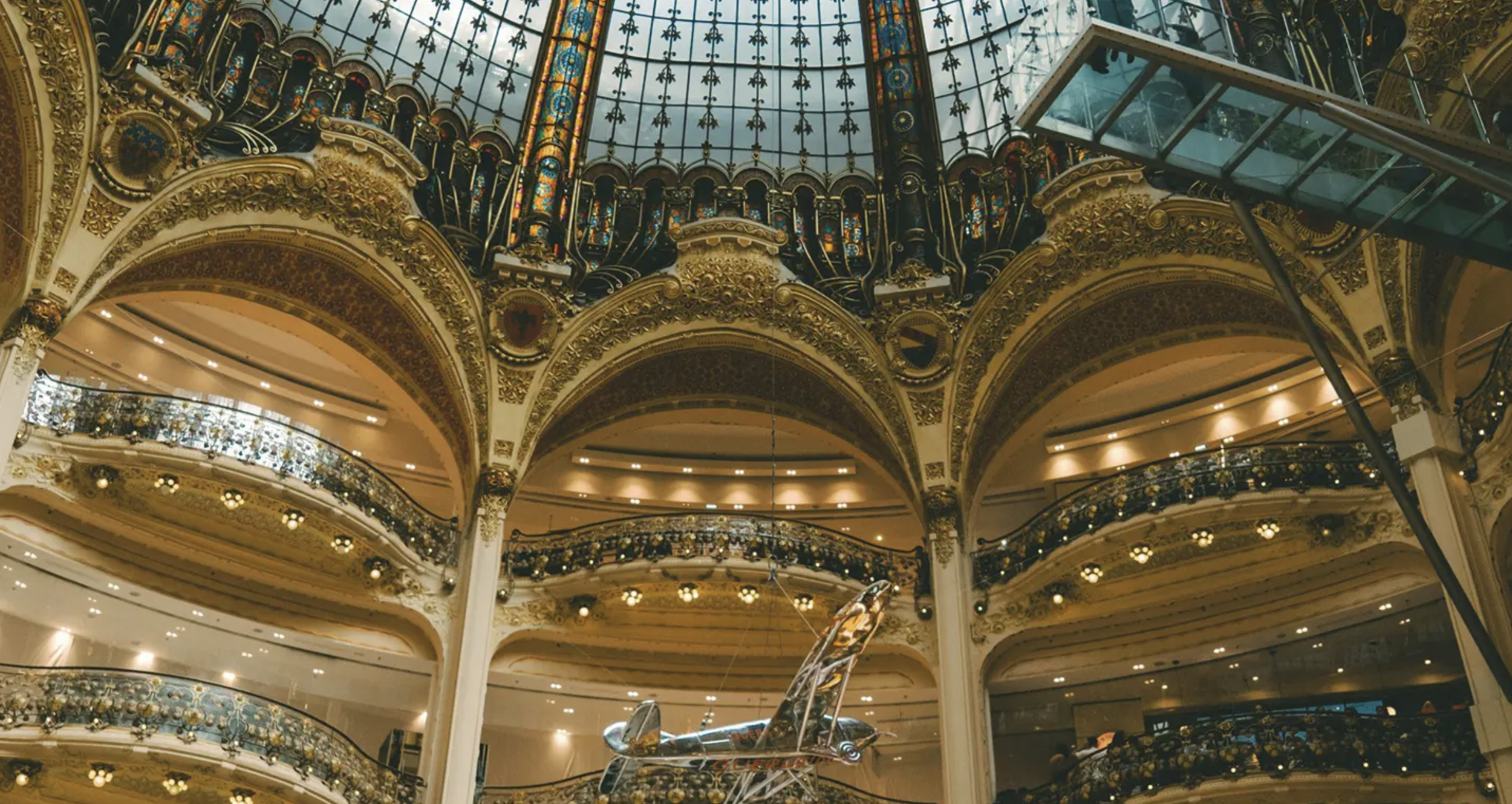
Heavy on design and deliberately light on merchandise, the space forces you to slow down and dwell. The details demand your respect. Frescoes are inspired by the legendary Printemps Haussmann rotunda in Paris. You walk across Louis XIV style Versailles royal parquet floors. You ascend a curved marble staircase that salutes Coco Chanel.
The curation is breathtaking. Following the European showroom model, you are not bombarded by inventory. Tiny sizes are hung on the racks like art installations, while your specific size is retrieved from hidden stockrooms. While you wait, you are invited to sit on plush, designer sofas, debate the purchase of block crystal candlesticks, sip Champagne, or eat oysters at the Raw Bar. The dressing rooms themselves are designed to the nines, complete with enough seating for a small party to group source the sartorial decisions of the day. It is the ultimate exercise in hospitality.
The Red Room and the Fragrance of Thoughtful Consumption
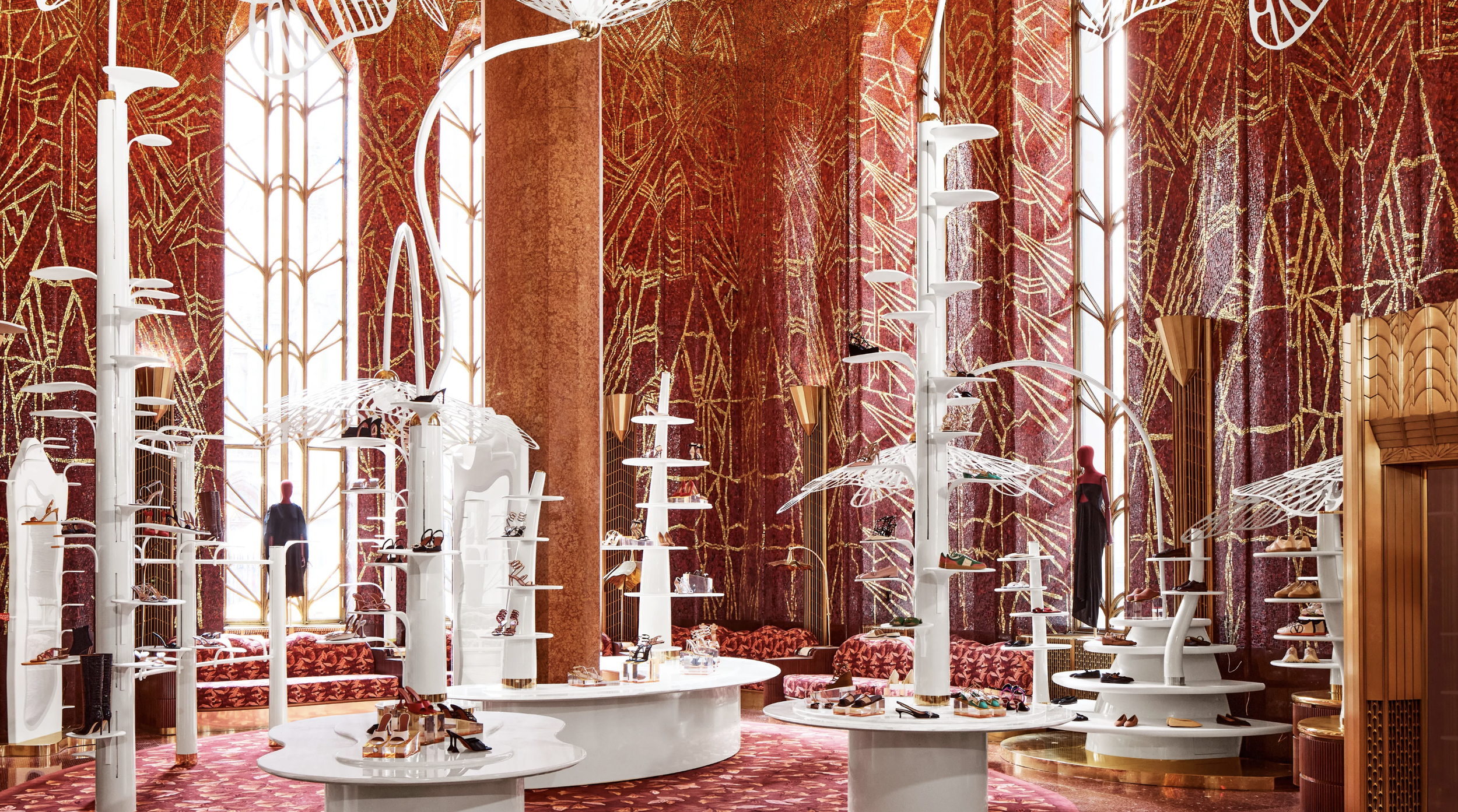
Nowhere is this commitment to visual intelligence more evident than the magnificent Red Room. Originally the Irving Trust lobby designed by Hildreth Meière in 1931 and fully landmarked in 2024, the room features three million red ombré and gold mosaic tiles. Printemps transformed this historic masterpiece into an iconic shoe salon, creating a "magic shoe forest" with a stunning 15 foot leaf canopy. It is visually intoxicating.
Adjacent to this is the Salle de Bain, a Beauty Corridor that completely reimagines how we interact with scent. Led by the brilliant Ariel Fantasia, the beauty curation emphasizes niche, thoughtful consumption. Fragrance represents over half of their beauty sales, leaning heavily on exclusive brands and olfactory storytelling rather than mass market celebrity perfumes. It is an invitation to find a signature scent that actually reflects your sovereign identity.
The Return of the Agora
A rational, clinical MBA analyst might look at the cost per square foot of this aesthetic wonderland and panic. They would see the five dedicated food and beverage spaces, the highly curated inventory where 25 percent of the brands are entirely exclusive to this location, and the massive investment in interior architecture, and they would run in the opposite direction.
But transformative retail has never been built by accountants. It is built by dreamers. Think of Harry Selfridge or Stanley Marcus. Printemps New York is playing the long game.
They have recognized that the lines between retail, hospitality, leisure, and entertainment have permanently blurred. With James Beard award winning chef Gregory Gourdet helming the fine dining at Maison Passerelle, Printemps has become a modern day agora. It is a gathering place for the new vanguard of New York creatives, founders, and aesthetes to work, trade ideas, and socialize.
Demand Enchantment
The lesson here extends far beyond shopping. Printemps New York is a masterclass in how to build a legacy in 2026. If you want to capture attention in an overcrowded, noisy world, you cannot just offer a product. You have to build a universe. You have to invite people into a feeling.
The store is packed because it respects the intelligence and the desires of its visitors. It asks us to redefine how we interact with beauty. I am endlessly blessed to be a small part of this new era of New York fashion. The old retail gods might be falling, but inside this stunning French apartment on Wall Street, the future has never looked brighter.
The next time you are building a brand, a career, or simply designing your own weekend, ask yourself this question. Are you settling for convenience, or are you demanding enchantment?
