The Reality of the Runway @ Parsons: How to Build an Independent Fashion Brand in New York
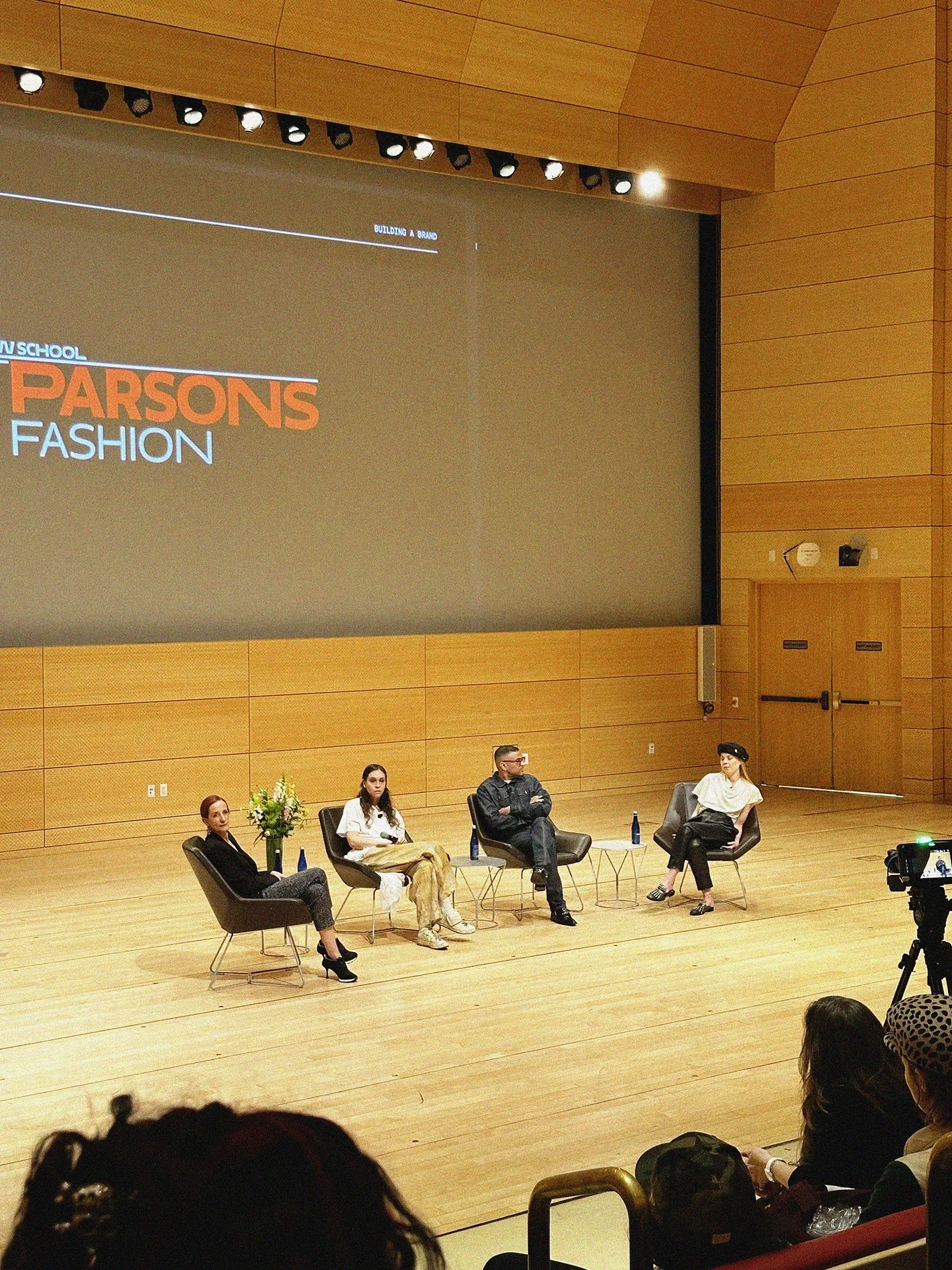
Sitting inside the Tishman Auditorium at the Parsons School of Design, the energy was palpable. For me, walking back onto campus was deeply nostalgic. As a Parsons fashion graduate, these halls hold the memories of my own late-night studio sessions, the rigorous critiques, and the sheer audacity it takes to dream of building an empire in this city. Watching a new generation of creatives gather for a masterclass in survival, I felt a profound wave of inspiration.
The panel, titled “Building A Brand,” promised an honest conversation about what it truly takes to transform a creative vision into a lasting independent label in New York City. Moderated by Vanessa Friedman, the fashion director and chief fashion critic at The New York Times, the room was anchored by three of the city’s most exciting and resilient design talents: Hillary Taymour of Collina Strada, Gigi Burris O'Hara of Gigi Burris Millinery, and Raul Lopez of Luar. Lopez was notably fresh off a monumental cultural moment, having just designed the now iconic blue dress Lady Gaga wore during her spectacular Super Bowl performance with Bad Bunny.
What followed was not a glamorous recounting of celebrity fittings and champagne toasts. Instead, it was a chic, raw, and profoundly human deconstruction of the grit, the grind, and the financial realities of surviving the modern fashion industry. Here is the unfiltered truth about building something of your own.
The Privilege of Access versus The Power of the Grind
A formal fashion education is a profound privilege. Gigi Burris noted how grateful students should be to attend a school like Parsons with its incredible resources and built-in network. But Lopez offered a radically different, deeply inspiring narrative for those who do not have that same access.
Lopez did not have the pedigree or the tuition money. Instead, he confessed to the crowd that he used to literally sneak into the Parsons building just to use the library and study the craft. He did not wait for an acceptance letter to learn his trade. Fast forward to today, and he is sitting on the main stage as an industry titan, dressing global superstars for the biggest stage in the world.
His story is the ultimate proof that you do not need permission to enter this industry. You can have the privilege of attending a world-class design school, or you can build your brand from the outside looking in. Either way, the true requirements for success are exactly the same: an unbreakable work ethic and a dream so loud you cannot ignore it.
The Myth of the Overnight Success
In an era of TikTok virality, there is a dangerous misconception that fashion brands explode overnight. The panel immediately dismantled this illusion. Success in fashion is not a sprint; it is an endurance sport.
"Nobody wants to be the assistant to the designer anymore," Lopez noted, quoting Marc Jacobs. He emphasized that true mastery takes time, highlighting that the designers we idolize today spent decades behind the scenes. "Everyone was an assistant for at least ten years. Your ego is your worst enemy. It is a working process. Stop thinking that because you're young, you have to launch right now. The designers you love... their careers took off when they were 40."
Hillary Taymour echoed this sentiment, admitting that eight years into Collina Strada, she was still questioning when the breakthrough would happen. "Business is like a child; you have to nourish it, feed it, give it your all. You can't make a baby grow in a day."
For these founders, the glamour of the runway is balanced by staggering hours. Taymour wakes up at 6:00 AM, fields emails until 2:00 AM, and rarely takes a weekend off. Gigi Burris starts her mornings at 7:00 AM at her Brooklyn factory, packing a tiny Smart car full of hats to transport into the city before spending her weekends hand-crafting custom pieces.
Bootstrapping and the Financial Reality
When the conversation shifted to money, the advice was sharp and unanimous: hold onto your equity.
When asked about securing early investments, Taymour’s response was clear. She started Collina Strada with just $10,000 saved from other jobs. "Start slow. Start making custom pieces. I wouldn't give up equity of a business that hasn't really started yet, because then you're just going to be in debt... you're selling something that's not worth anything yet."
Burris added a brilliant perspective on the scale of mistakes. "If you have a ton of funding at the beginning, you're going to make very expensive mistakes. If you have small funding, you're going to make less expensive mistakes. Absorb those lessons, and then as you start to grow, you can secure funding for essentials."
Lopez, drawing deep inspiration from his Dominican heritage and his father's relentless hustle as a construction worker, offered the ultimate rule for financial sovereignty. Never mix personal and business finances. "Don't touch your money," he warned the audience. "Don't buy a car with that. You have to pay your team, your livelihood. I don't even touch my business card."
Trusting Your Gut Over Industry Standards
Perhaps the most poignant moments of the evening came when the designers discussed their greatest regrets. All of these stemmed from ignoring their own intuition in favor of what the industry deemed correct.
For Burris, it was staying with a highly prestigious wholesale showroom long after she knew it was hurting her brand. "I knew I should have left well before I did, but they were deemed 'the best' in the business. They dragged my business into the ground, and I did not listen to my gut because I was told, 'Why would you leave them?'" Her takeaway for the next generation? "I'd rather work with the hungriest person in the room than 'the best.' You want someone who wants the money just as bad as you do and believes in you."
Taymour’s hardest lesson cost her deeply. She began production on a massive shoe collaboration before the final contract was signed, based purely on phone conversations. When the contract finally arrived, it was missing three zeros from the agreed-upon payout, leaving her with massive production costs and an evaporated deal. "Don't start designing before the contract is signed," she advised with a wry smile.
The True Meaning of the Brand
Building a brand in New York City requires you to be a master of dichotomy. You must be an artist who understands payroll, a visionary who handles HR, and a creative who is unafraid to negotiate a contract.
As the panel wrapped, the message was clear. The path is grueling, the hours are unrelenting, and the noise of the industry is deafening. But if you can block out the noise, protect your equity, and deeply trust your own creative instincts, the reward is total sovereignty.
You do not need an invitation to be great. You just need the courage to walk into the room and start building.
